Welcome to the International Institute of Tropical Agriculture Research Repository
IITA Bibliography System: Recent submissions
Now showing items 1541-1560 of 8125
-
Aflatoxin contamination in Tanzania: quantifying the problem in maize and groundnuts from rural households
(2021)Aflatoxins are toxic and carcinogenic secondary metabolites, produced by Aspergillus flavus and Aspergillus parasiticus, which contaminate food and feed and threaten human and animal health. To assess the prevalence of aflatoxins in Tanzania, 180 groundnut and 200 maize samples were collected from 9 and 10 districts, respectively. Aflatoxin contamination was quantified using high performance liquid chromatography. Aflatoxins were detected in samples collected from all districts and prevalence ... -
Distribution and diversity of alternate hosts of Maruca vitrata Fabricius in three west African countries
(2021)The evolution of resistance to the Bacillus thuringiensis (Bt) toxins by insect pests is a major threat to Bt technology. However, the rate of resistance can be slowed with appropriate integrated insect resistance management (IRM) strategies. Surveys were conducted to identify alternate host species for Maruca vitrata (commonly called the legume pod borer or Maruca) that could serve as refuges for Pod-Borer Resistant (PBR) cowpea in three West African countries (Ghana, Nigeria, and Burkina Faso). ... -
Progeny fitness determines the performance of the parasitoid Therophilus javanus, a prospective biocontrol agent against the legume pod borer
(2021)Therophilus javanus (Bhat & Gupta) is an exotic larval endoparasitoid newly imported from Asia into Africa as a classical biological control agent against the pod borer Maruca vitrata (Fabricius). The parasitoid preference for the five larval instars of M. vitrata and their influence on progeny sex ratio were assessed together with the impact of larval host age at the time of oviposition on development time, mother longevity and offspring production. In a choice situation, female parasitoids ... -
Cocoyam (Colocasia esculenta) provides an effective monoxenic culture media for Radopholus similis
(2021)The burrowing nematode, Radopholus similis, is the most economically important nematode parasite of bananas, in addition to parasitising a range of other crops (Coyne & Kidane, 2018). Weakened, infected roots result in poor plant development and they are less able to provide anchorage to banana plants, which can lead to toppling of the entire plant. To enable research activities, such as resistance screening and efficacy studies, a readily available supply of inoculum is required for timely use ... -
Genome wide association analysis of a stemborer egg induced “call‑for‑help” defence trait in maize
(2020)Tritrophic interactions allow plants to recruit natural enemies for protection against herbivory. Here we investigated genetic variability in induced responses to stemborer egg-laying in maize Zea mays (L.) (Poaceae). We conducted a genome wide association study (GWAS) of 146 maize genotypes comprising of landraces, inbred lines and commercial hybrids. Plants were phenotyped in bioassays measuring parasitic wasp Cotesia sesamiae (Cameron) (Hymenoptera: Braconidae) attraction to volatiles collected ... -
Rapid determination of fructooligosaccharide in solar‑dried banana syrup by using near‑infrared spectroscopy
(2021)The transformation of value-added solar-dried banana to banana syrup, which contains very high levels of fructooligosaccharides (FOS), is attractive. It has promising economic potential for the nutraceutical and functional food industry. In this study, the near-infrared (NIR) spectroscopy was used for the detection of 1-kestose (GF2), nystose (GF3), 1F-fructofuranosylnystose (GF4), and total FOS in solar-dried banana syrup in the spectral region of 4000–12,000 cm−1. Partial Least Squares (PLS) ... -
Comparative assessment of genetic diversity in tissue culture - and field - propagated white yam (Dioscorea rotundata) accession using molecular marker (SSRs) and morphological characterization
(Cross River University of Technology, 2018-04)This experiment was conducted at theInternational Institute of Tropical Agriculture (IITA), Ibadan. The objective of the study was to contribute to the understanding of Dioscorea rotundata maintained in vitro and field to observe if there could be any variability in their genetic material due to their different storage conditions by genotyping 43 accessions from in vitro and field populations using 11 microsatellite markers and 25 morphological descriptors to access variability within and between ... -
Morphological and molecular characterisation of Aporcelaimellus nigeriensis sp. n. (Dorylaimida: Aporcelaimidae), a remarkable dorylaim from Nigeria
(2020)A new species of Aporcelaimellus, collected in a watermelon field in Nigeria, is described, including its morphological and molecular (D2-D3 28S-rDNA, 18r-DNA) characterisation. Aporcelaimellus nigeriensis sp. n. is distinguishable by its 2.76-3.55 mm length, very coarse ventral body pores, lip region offset by deep constriction and 24-27 μm broad odontostyle 30-36 μm long at its dorsal and 28-31 μm at its ventral side, neck 648-779 μm long, pharyngeal expansion occupying 54-60% of total neck ... -
Evaluation of drought tolerant maize hybrids for tolerance to heat and combined drought and heat stresses
(University of Ibadan, 2019-12)Low maize yields and the impacts of climate change on maize production shows the need to improve yields in Sub-Saharan Africa. Thus the objective of this study is to evaluate DT maize hybrids under heat and combined heat and drought stresses and to determine the relationship between grain yield and other agronomical trait. In this study two groups of hybrids were used. Eighteen top cross maize hybrids, one local check and a standard check laid-out in alpha lattice of 5x4 with two replicates, the ... -
A case to de-register and prohibit the use of Paraquat in Nigeria
(International Institute of Tropical Agriculture, 2020-05) -
New cassava germplasm for food and nutritional security in central Africa
(2021)Cassava is a key food security crop in Central Africa, but its production depends largely on the use of local farmers’ varieties characterized by inherently low yield which is compounded by generally high susceptibility to various growth and yield-limiting pests and diseases. Improved cassava genotypes have demonstrated the potential to substantially improve cassava’s contribution to food security and the development of the cassava industry and the improvement of nutrition status elsewhere in ... -
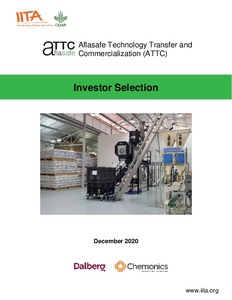
Aflasafe Technology Transfer and Aflasafe Commercialization (ATTC): investor selection
(International Institute of Tropical Agriculture, 2020-12) -
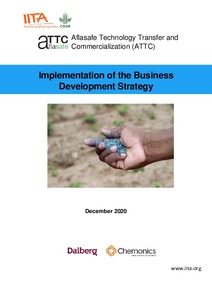
Aflasafe Technology Transfer and Aflasafe Commercialization (ATTC): implementation of the business development strategy
(International Institute of Tropical Agriculture, 2020-12) -
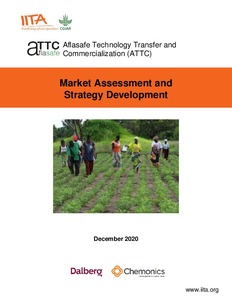
Aflasafe Technology Transfer and Aflasafe Commercialization (ATTC): market assessment and strategy development.
(International Institute of Tropical Agriculture, 2020-12) -
Unveiling African rainforest composition and vulnerability to global change
(2021)Africa is forecasted to experience large and rapid climate change1 and population growth2 during the twenty-first century, which threatens the world’s second largest rainforest. Protecting and sustainably managing these African forests requires an increased understanding of their compositional heterogeneity, the environmental drivers of forest composition and their vulnerability to ongoing changes. Here, using a very large dataset of 6 million trees in more than 180,000 field plots, we jointly ... -
Effect of single or dual inoculation of the arbuscular mycorrhizal fungus Glomus mosseae and root‑nodulating rhizobacteria on reproduction of the burrowing nematode Radopholus similis on non‑leguminous and leguminous banana intercrops
(2021)The bio-protective effect of either single or dual mycorrhizal (AMF) and rhizobial colonisation of the roots of non-leguminous and leguminous banana intercrops differing in host response to Radopholus similis on the reproduction of this important migratory endoparasitic nematode was examined. Included in the study were sorgho-Sudan grass (good R. similis host), sweet potato and common bean (intermediate hosts), soybean and sunn hemp (poor hosts), and marigold (non-host). Significant plant ... -
Direct estimation of maize leaf area index as influenced by organic and inorganic fertilizer rates in Guinea Savanna
(2020-05-15)Leaf area index (LAI) plays an important role in radiation capture, crop growth and yield formation. However, there is limited quantitative data on the influence of poultry manure (PM) and NPK fertilizer rate (NPK) on LAI, as estimated directly. Using a split-plot design with three replications, a field experiment was conducted to determine the effects of three PM rate (0, 2 and 4 t/ha) as main plot and three NPK rate (0:0:0, 60:30:30 and 120:60:60 kg N P2O5 K2O/ha) as sub plot, on LAI and maize ... -
Simulating the response of drought-tolerant maize varieties to nitrogen application in contrasting environments in the Nigeria Savannas using the APSIM Model
(2020-12-31)This paper assessed the application of the Agricultural Production Systems sIMulator (APSIM)–maize module as a decision support tool for optimizing nitrogen application to determine yield and net return of maize production under current agricultural practices in the Nigeria savannas. The model was calibrated for two maize varieties using data from field experiments conducted under optimum conditions in three locations during the 2017 and 2018 cropping seasons. The model was evaluated using an ... -
Optimizing sowing density-based management decisions with different nitrogen rates on smallholder maize farms in northern Nigeria
(2021)In this study, the CERES-Maize model was calibrated and evaluated using data from 60 farmers’ fields across Sudan (SS) and Northern Guinea (NGS) Savannas of Nigeria in 2016 and 2017 rainy seasons. The trials consisted of 10 maize varieties sown at three different sowing densities (2.6, 5.3, and 6.6 plants m−2) across farmers’ field with contrasting agronomic and nutrient management histories. Model predictions in both years and locations were close to observed data for both calibration and evaluation ...