Welcome to the International Institute of Tropical Agriculture Research Repository
IITA Bibliography System: Recent submissions
Now showing items 1821-1840 of 8126
-
Quantitative trait loci mapping for resistance to maize streak virus in F2:3 population of tropical maize
(2020)Maize streak virus (MSV) continues to be a major biotic constraint for maize production throughout Africa. Concerning the quantitative nature of inheritance of resistance to MSV disease (MSVD), we sought to identify new loci for MSV resistance in maize using F2:3 population. The mapping population was artificially inoculated with viruliferous leafhoppers under screenhouse and evaluated for MSVD resistance. Using 948 DArT markers, we identified 18 quantitative trait loci (QTLs) associated with ... -
Improving the efficiency of Beauveria bassiana applications for sustainable management of Plutella xylostella (Lepidoptera: Plutellidae) in west Africa
(2020-02-15)The effectiveness of the entomopathogenic fungus Beauveria bassiana (Balsamo) Vuillemin isolates Bb11, Bb115, Bb116 and Bb362 against the diamondback moth (DBM), Plutella xylostella (L.) population from Cotonou, Benin, was investigated in the laboratory and on station. In the laboratory, six concentrations, 104, 105, 106, 107, 108 and 109 conidia/ml of each isolate were used to assess B. bassiana virulence. Third instar DBM larvae were inoculated with 2 µl of each isolate’s concentrations by topical ... -
Temperature-dependent development, survival and reproduction of Apanteles hemara (Nixon) (Hymenoptera: Braconidae) on Spoladea recurvalis (F.) (Lepidoptera: Crambidae)
(2020-02-18)The temperature-dependent development of Apanteles hemara (Nixon), a larval endoparasitoid of the devastating amaranth pest Spoladea recurvalis (F.) was studied in the laboratory at six constant temperatures (10, 15, 20, 25, 30 and 35 °C), a photoperiod of 12L:12D and a relative humidity of 60–70%. Developmental time decreased significantly with increasing temperature within the range of 15–30 °C. The parasitoid's pupal mortality, successful parasitism rate, adult emergence rate and longevity, sex ... -
Contour bunding technology-evidence and experience in the semiarid region of southern Mali
(2019-02-20)Land and water management practices have been widely implemented in rural Mali since the 1980s to improve agricultural productivity and erosion control. Under conditions of recurring droughts, these practices are expected to increase farmers' ability to cope with shocks. One of the most common practices applied in the central and southern parts of Mali is contour bunding (CB). In this study the impact of the CB technology is evaluated with a focus on biophysical and socio-economic benefits. Data ... -
Evaluating the distributional impacts of drought-tolerant maize varieties on productivity and welfare outcomes: an instrumental variable quantile treatment effects approach
(2019-12-23)In an attempt to go beyond the conventional mean impact assessment of agricultural interventions, this paper examines the distributional impacts of adoption of drought-tolerant maize varieties (DTMVs) on the productivity and welfare outcomes of rural farming households in Nigeria. The study employed a conditional instrumental variable quantile treatment effects approach to control for selection bias that may arise from both observed and unobserved factors. The empirical findings revealed that ... -
Sexual communication of Spodoptera frugipera from west Africa: adaptation of an invasive species and implications for pest management
(2020-02-19)The pest species Spodoptera frugiperda, which is native to North and South America, has invaded Africa in 2016. The species consists of two strains, the corn-strain and rice-strain, which differ in their sexual communication. When we investigated populations from Benin and Nigeria, consisting of corn-strain and rice-corn-hybrid descendants, we found no strain-specific sexual communication differences. Both genotypes exhibited the same pheromone composition, consisting of around 97% (Z)-9-tetradecenyl ... -
Plant tissue analysis as a tool for predicting fertiliser needs for low cyanogenic glucoside levels in cassava roots: an assessment of its possible use
(2020-02-13)The use of plant tissue analysis as a tool for attaining low cyanogenic glucoside levels in cassava roots, has hardly been investigated. Just as the quality of crops is improved through the use of plant tissue analysis, the same can probably be done to consistently attain the lowest possible cyanogenic glucoside levels in cassava roots. High levels of cyanogenic glucosides in consumed fresh cassava roots or in their products have the potential of causing cyanide intoxication, hence the need to ... -
Metagenomic insights of the root colonizing microbiome associated with symptomatic and non-symptomatic bananas in fusarium wilt infected fields
(2020-02-18)Plants tissues are colonized by diverse communities of microorganisms called endophytes. They are key determinants of plant production and health, for example by facilitating nutrient exchanges or limiting disease development. Endophytic communities of banana plants have not been studied until very recently, and their potential role in disease development has not been explored so far. Roots from symptomatic and non-symptomatic banana plants were sampled from fields infected by Fusarium oxysporum ... -
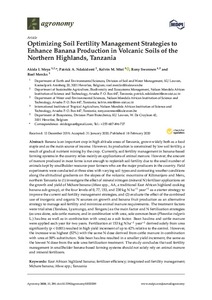
Optimizing soil fertility management strategies to enhance banana production in volcanic soils of the northern highlands, Tanzania
(2020-02-18)Banana is an important crop in high altitude areas of Tanzania, grown widely both as a food staple and as the main source of income. However, its production is constrained by low soil fertility, a result of gradual nutrient mining by the crop. Currently, soil fertility management in banana-based farming systems in the country relies mainly on applications of animal manure. However, the amount of manure produced in most farms is not enough to replenish soil fertility due to the small number of ... -
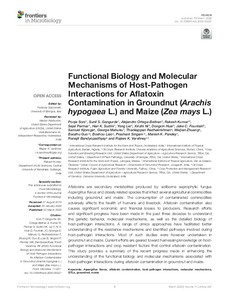
Functional biology and molecular mechanisms of host-pathogen interaction for aflatoxin contamination in groundnut (Arachis hypogaea L.) and maize (Zea mays L.)
(2020-03-03)Aflatoxins are secondary metabolites produced by soilborne saprophytic fungus Aspergillus flavus and closely related species that infect several agricultural commodities including groundnut and maize. The consumption of contaminated commodities adversely affects the health of humans and livestock. Aflatoxin contamination also causes significant economic and financial losses to producers. Research efforts and significant progress have been made in the past three decades to understand the genetic ... -
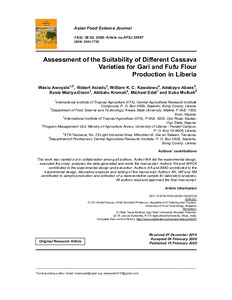
Assessment of the suitability of different cassava varieties for gari and fufu flour production in Liberia
(2020)Different cassava varieties are available in Liberia, but there is little knowledge of their product suitability. Hence, the need to assess the potentials of these varieties to produce gari and fufu flour. The two products from ten improved and two local cassava varieties were characterized based on their yield and chemical, pasting and functional properties using standard methods. The results showed that TMS 96/0097 (gari 27.54%) and Butter cassava (fufu flour 27.35%) have the highest percentage ... -
Molecular breeding for nutritionally enriched maize: status and prospects
(2020-02-21)Maize is a major source of food security and economic development in sub-Saharan Africa (SSA), Latin America, and the Caribbean, and is among the top three cereal crops in Asia. Yet, maize is deficient in certain essential amino acids, vitamins, and minerals. Biofortified maize cultivars enriched with essential minerals and vitamins could be particularly impactful in rural areas with limited access to diversified diet, dietary supplements, and fortified foods. Significant progress has been made ... -
Automated irrigation as a game-changer in sub-Saharan Africa: Is it enough?
(Africa RISING, 2019) -
Impact assessment report of YIIFSWA project: raising household income, improving food security and reducing poverty in Ghana
(International Institute of Tropical Agriculture, 2017) -
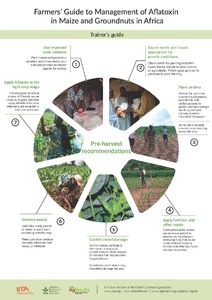
Management of aflatoxins in maize and groundnuts in Kenya: a farmers' training manual
(International Institute of Tropical Agriculture, 2018) -
A review of inclusive business models and their application in aquaculture development
(2020-01-30)achieving the Sustainable Development Goals, value chains must become more inclusive. Smallholders and other local value chain actors are often constrained by circumstances and market failures in the global aquaculture industry. Integrating these actors into aquaculture value chains through inclusive business models (IBMs) is often touted as a solution to sustainable and ethical trade and business that can generate development outcomes. We reviewed 36 papers under seven business models commonly ... -
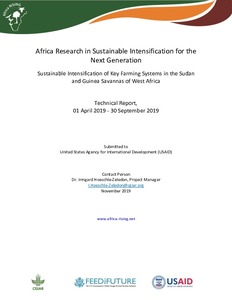
Africa research in sustainable intensification for the next generation: sustainable intensification of key farming systems in east and southern Africa
(Africa RISING, 2019-11)The Africa Research In Sustainable Intensification for the Next Generation (Africa RISING) program comprises three research-in-development projects supported by the United States Agency for International Development (USAID) as part of the U.S. Government’s Feed the Future initiative. Through action research and development partnerships, Africa RISING is creating opportunities for smallholder farm households to move out of hunger and poverty through sustainably intensified farming systems that ...